

Do Flyers Still Work in 2025? UK Data & Trends
In 2025, flyer marketing remains a relevant and measurable advertising tool for UK businesses, despite the dominance of digital channels. Various studies indicate that printed flyers continue to drive strong recall and local engagement, offering brands a tangible way to reach target audiences. The effectiveness of flyers now depends on modern strategies such as sustainable printing, data-led targeting, and integration with digital platforms.
This article examines how flyers still work in 2025, supported by UK data, performance trends, and practical insights into what makes print marketing successful today. Explore more in The Ultimate Guide to Flyer and Leaflet Printing or visit Flyers and Leaflets UK.
Table Of Contents
1. Why Print Marketing Still Works
Despite the rise of digital advertising, print remains one of the UK’s most trusted and engaging marketing formats. Research from Royal Mail MarketReach shows that 95% of door-drop mail is opened, read, or kept, and 67% of recipients were prompted to visit a website or make a purchase after receiving printed material (MarketReach, 2023). The Data & Marketing Association (DMA) also reports that three in four consumers read or retain leaflets and flyers, proving print continues to play a vital role in local and national campaigns.
Print’s tactile nature gives it a sensory advantage — it’s easier to remember, harder to ignore, and helps brands build credibility. For UK businesses, combining print with digital strategies offers the best of both worlds: trusted communication and measurable engagement.
2. The Numbers Behind Flyer Success
Recent UK statistics confirm that flyer campaigns remain a smart investment:
- Average engagement: Around 9-11% of recipients take an action such as visiting a website or making an enquiry (DMA).
- Purchase-related outcomes: Approximately 4% of recipients go on to buy or book a service (Royal Mail MarketReach).
- Return on investment: On average, every £1 spent on print can generate up to £6-7 in revenue (Newsworks).
These figures highlight that while flyers may seem traditional, they still deliver measurable results — especially when campaigns are well-targeted, creative, and consistent.
For more detail on campaign performance, you can also read Flyer Distribution & ROI: A Practical Guide.
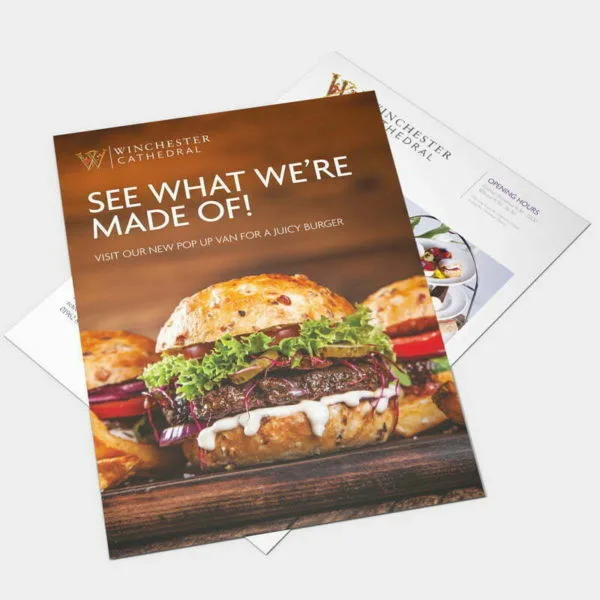
3. Who Benefits Most from Flyer Marketing
Flyers remain especially effective for industries that rely on local customers or face-to-face engagement:
- Retail and hospitality – promoting offers, menus, and openings.
- Local services – such as trades, fitness centres, salons, and estate agents.
- Community and charity events – fairs, fundraisers, and cultural activities.
Interestingly, younger UK audiences are increasingly responsive to printed marketing. Research from Royal Mail MarketReach’s “The Value of Mail” study found that 46% of people aged 15–34 took action after receiving direct mail — a higher rate than older age groups (MarketReach).
This shift challenges the assumption that only older consumers engage with physical media, showing that print continues to resonate across generations when campaigns are relevant, well-designed, and locally targeted.
If you’re designing for a specific industry, explore our Flyer Design Tips and Checklist for UK Brands.
4. The Modern Flyer: Print Meets Digital
Flyer marketing in 2025 is more connected than ever. Businesses are linking print to digital channels for improved tracking and engagement:
- QR codes and trackable URLs encourage instant online actions.
- Sustainable materials and eco-friendly printing appeal to environmentally conscious consumers.
- Short-run, personalised printing enables hyper-local and data-driven campaigns.
Rather than competing with digital, flyers now act as a bridge — guiding audiences from physical engagement to online conversion. You can also learn how to make your print more sustainable with Eco-Friendly Flyer Printing in the UK.
5. UK Flyer Marketing Statistics at a Glance (2025)
This data reinforces that, when executed strategically, flyer marketing still holds real value for UK businesses.
| Metric | 2025 UK Average | Insight |
|---|---|---|
| Recall Rate | 89% (MarketReach) | Print media delivers high memorability, outperforming most digital channels. |
| Retention (kept for later) | 45% (DMA) | Many UK consumers keep flyers and leaflets for later use or offers. |
| Purchase Conversion | 4% (MarketReach) | Typical conversion rate for well-targeted door-drop campaigns. |
| Overall Engagement | 11% (DMA) | Includes website visits, phone calls, and customer enquiries. |
| ROI Estimate | £6–7 per £1 spent (Newsworks) | Consistent with UK print advertising averages showing strong cost-effectiveness. |
| Top Responding Age Group | Under 35s (MarketReach) | Younger demographics are increasingly responsive to print campaigns. |
6. How to Create Flyers That Deliver Results
Effective flyer campaigns depend on both design and delivery.
Design essentials:
- Use short, clear copy and a single call-to-action.
- Maintain strong branding with consistent fonts and colours.
- Feature an incentive such as a discount, promo code, or QR link.
Distribution best practice:
- Target by postcode or demographic for maximum impact.
- Combine print with online campaigns for wider reach.
- Schedule repeat drops to reinforce brand recognition.
A professionally designed flyer with a clear offer remains one of the most persuasive marketing tools available. Consider pairing your design with A6 leaflets or tri-fold leaflets to create a versatile, high-quality campaign.

7. Common Reasons Flyer Campaigns Fail
Even the best intentions can fall short if the strategy is weak. Flyer campaigns underperform when:
- The design lacks clarity or visual appeal.
- Messaging doesn’t speak to a defined audience.
- There’s no way to track performance or ROI.
Businesses can avoid these issues by testing designs, refining messaging, and using digital tracking methods to measure response.
8. Measuring and Improving Flyer Performance
Tracking flyer success in 2025 is simple and data-driven:
- QR codes link to unique landing pages for measurable visits.
- Promo codes allow direct sales attribution.
- Dedicated phone numbers and UTM links track conversions accurately.
Regularly analysing response rates and ROI helps businesses refine targeting, messaging, and timing for better future results.
9. The Future of Flyer Marketing in the UK
The UK flyer market is evolving, not declining. Key trends shaping 2025 and beyond include:
- Increased demand for eco-friendly paper stocks and sustainable printing.
- Growth of data-driven targeting and personalised campaigns.
- Emerging interactive technologies such as NFC and augmented reality print.
Flyers are becoming smarter, greener, and more integrated — proving that print remains a powerful part of the modern marketing mix.
Conclusion: Print That Delivers
In 2025, flyers still work. Their tangibility cuts through digital clutter, builds trust, and drives measurable results when supported by strong creative and targeted distribution. For UK businesses, flyers are no longer a standalone tactic but a key part of integrated, data-led campaigns.
For a complete overview of print formats and strategies, visit The Ultimate Guide to Flyer and Leaflet Printing.
Next Step
Want to see what flyers can do for your next campaign? Combine thoughtful design, precise targeting, and sustainable materials to reach the right audience — and watch how effective print marketing can be in 2025.