

Eco-Friendly Flyer Printing in the UK
Eco-friendly flyer printing offers UK businesses a sustainable way to promote their products and services without harming the environment. By using recycled paper, vegetable-based inks, and energy-efficient printing methods, companies can reduce waste and carbon emissions while maintaining professional print quality. This environmentally responsible approach aligns with growing consumer demand for greener marketing materials and supports broader corporate sustainability goals. For more inspiration on effective printed materials, explore our full guide to flyers and leaflets or browse Flyers and Leaflets UK for related print options.
The following article explores how eco-friendly flyer printing works in the UK, including the best materials, technologies, and strategies for creating effective, sustainable marketing campaigns.
Table Of Contents
1. What Makes Flyer Printing Eco-Friendly?
Eco-friendly flyer printing focuses on reducing environmental impact at every stage of production. It’s about making smart, sustainable choices that protect natural resources and minimise waste.
Key features include:
- Recycled or FSC-certified paper from responsibly managed forests.
- Vegetable-based or water-based inks instead of petroleum-derived alternatives.
- Energy-efficient printing technologies such as LED-UV, which consume far less power.
- Carbon-balanced printing, where emissions are offset through verified projects.
- Zero-waste policies, ensuring leftover materials are recycled or reused.
These sustainable methods help UK businesses promote their brands responsibly while aligning with consumer expectations for environmental awareness.
2. Why UK Businesses Are Embracing Sustainable Flyers
As sustainability becomes central to corporate responsibility, more UK businesses are switching to environmentally conscious print solutions. Sustainable flyer printing is not only good for the planet — it also delivers tangible business benefits.
- Strengthens brand reputation by showcasing genuine environmental values.
- Builds customer trust, with eco-aware audiences preferring responsible brands.
- Reduces waste and cost, especially through short-run or on-demand printing.
- Supports ESG and sustainability goals, contributing to positive reporting outcomes.
For businesses comparing different print formats, our guide on flyers vs leaflets provides valuable insight into which format best suits your campaign objectives.
3. Sustainable Materials: Paper, Inks, and Finishes
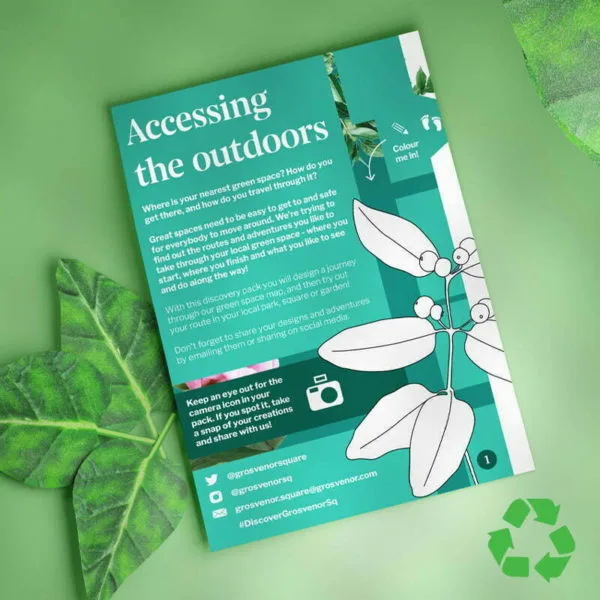
Choosing the right materials is essential to creating eco-friendly flyers that look great and perform well.
Paper:
- Use 100% recycled paper or FSC-certified stocks from sustainably managed forests.
- Explore alternative materials like bamboo, hemp, or stone paper, which are renewable and durable.
Inks:
- Opt for vegetable-based inks, made with renewable oils such as soy or linseed.
- Consider water-based inks that emit fewer volatile organic compounds (VOCs) and work well for digital printing.
Finishes:
- Avoid plastic laminates and UV varnishes that complicate recycling.
- Choose matte or aqueous coatings that are biodegradable and easy to process.
Using these materials ensures flyers remain professional in quality while significantly lowering their environmental impact. Businesses interested in printed sustainability alternatives can also explore eco-friendly leaflets for similar green print solutions.
Sustainable Flyer Printing Essentials
Using these materials ensures flyers remain professional in quality while significantly lowering their environmental impact.
| Category | Eco-Friendly Option | Environmental Benefit |
|---|---|---|
| Paper | 100% Recycled / FSC-certified | Reduces deforestation and waste |
| Inks | Vegetable or Water-based | Lower VOC emissions, renewable sources |
| Finish | Matte or Aqueous Coating | Fully recyclable and biodegradable |
| Printing Process | LED-UV / Digital | Reduces energy use and waste |
| Distribution | Local or Targeted | Minimises carbon footprint |
| End of Life | Recyclable Design | Supports circular economy |
4. Eco Printing Technology and Processes
Technology plays a vital role in reducing the carbon footprint of print production. Modern innovations allow printers to create stunning, high-quality flyers while maintaining sustainability.
- Digital printing allows precise short runs, eliminating excess production and waste.
- LED-UV litho printing uses light rather than heat to cure inks, cutting energy use by up to 70% (GoodIUV).
- Waterless offset printing removes chemical dampening solutions from the process.
- Closed-loop recycling systems capture and reuse waste materials.
These technologies demonstrate how sustainable printing can be both efficient and visually impressive — proof that eco-conscious production doesn’t mean sacrificing quality.
5. Distribution and End-of-Life Responsibility
Sustainability extends beyond production. How flyers are distributed, used, and disposed of also shapes their environmental impact.
- Plan targeted print runs to reduce overproduction.
- Use local distribution to cut down on transport emissions.
- Encourage recycling by including clear disposal or recycling instructions on every flyer.
- Offset remaining emissions through verified carbon schemes such as woodland restoration projects.
Thoughtful planning at every stage ensures that marketing campaigns are effective, responsible, and consistent with wider sustainability values.
6. Choosing a Sustainable Printing Partner
Partnering with the right printer is key to achieving genuine eco-friendly results. Businesses should look for partners who demonstrate transparency and certified sustainable practices.
Checklist for selecting a printer:
- Use of FSC or PEFC-certified paper stocks.
- Verified use of vegetable or water-based inks.
- ISO 14001 or Carbon Balanced certification.
- Renewable energy or energy-efficient printing equipment.
- Transparent reporting on waste management and recycling.
Selecting a credible, environmentally responsible print provider ensures that your marketing materials reflect your brand’s sustainability values.
7. Costs and ROI of Sustainable Printing
Eco-friendly flyer printing can be cost-effective when approached strategically. While certain materials or certifications might have a slightly higher upfront cost, savings often appear through waste reduction, energy efficiency, and optimised print runs.
The return on investment goes beyond money:
- Enhanced consumer loyalty through trust in sustainable branding.
- Positive perception that strengthens long-term brand equity.
- Alignment with environmental and social governance goals.
Businesses that invest in sustainability often enjoy stronger relationships with customers and improved brand reputation. For cost and production insights, see our paper types, finishes, and print quality guide.
8. Dispelling Common Myths About Green Printing
Despite the growing popularity of sustainable printing, misconceptions persist.
- “Recycled paper looks dull.” - Modern recycled stocks are smooth, bright, and high-quality.
- “Eco printing costs too much.” - Digital and short-run printing options make it affordable.
- “Sustainable flyers lack quality.” - New print technologies deliver sharp, vibrant results that match traditional methods.
The reality is that eco-friendly flyers perform just as well — if not better — than their conventional counterparts.
9. Designing and Ordering Eco Flyers
Design plays a crucial role in reducing waste and maximising sustainability. Keep these principles in mind:
- Opt for simple, minimalist layouts to use less ink.
- Include a recycling symbol or sustainability message.
- Print in smaller batches and reprint as needed.
- Add QR codes to link printed materials to digital content, reducing the need for lengthy text.
- Work closely with your printer to ensure artwork aligns with eco-friendly materials.
By integrating sustainability into the design process, businesses can enhance efficiency and reinforce their green credentials. For practical design advice, read flyer design tips and checklist for UK brands.
10. The Future of Eco-Friendly Flyer Printing in the UK
The UK printing industry continues to innovate in sustainable practices. Future trends include:
- Carbon-neutral production, powered entirely by renewable energy.
- Biodegradable coatings and adhesives replacing synthetic materials.
- Higher recycling rates and closed-loop systems.
- Automation and smart print management to reduce errors and excess production.
As these advances become mainstream, eco-friendly flyer printing will evolve from a niche option into the industry standard for responsible marketing.
Conclusion: Printing for a Greener Future
Eco-friendly flyer printing allows UK businesses to combine effective marketing with genuine sustainability. By choosing recycled paper, renewable inks, and certified printing partners, brands can significantly reduce their environmental impact while maintaining the same professional results.
If your organisation is ready to embrace greener marketing, review your next print order. Choose certified materials, work with a sustainable printer, and make eco-friendly flyer printing part of your long-term environmental strategy. Please take a look at our full guide for more information on how to design, promote, distribute and choose your flyers and leaflets.