

Legal & Ethical Flyer Printing in the UK
Legal and ethical flyer printing in the UK involves following strict advertising standards, distribution laws, and environmental responsibilities to ensure marketing materials are both compliant and sustainable. From securing the correct local council permissions to using eco-friendly paper and inks, UK businesses must balance effective promotion with social and environmental accountability. For reliable and sustainable printing solutions, visit Flyers and Leaflets UK or take a look at our full guide.
This article explores the key legal requirements, ethical considerations, and best practices that help ensure your flyer campaigns remain professional, responsible, and fully compliant with UK regulations.
Table Of Contents
Understanding UK Flyer Distribution Laws
In the UK, flyer and leaflet distribution is subject to specific regulations designed to prevent littering and ensure responsible marketing. Businesses should familiarise themselves with local rules before starting a campaign.
Key legal requirements:
- Local authority permissions: Most councils require a licence for distributing flyers in public areas. The licence may specify where and when materials can be handed out.
- Exceptions to licences: You typically don’t need permission for letterbox deliveries, in-building distribution, or including flyers with deliveries.
- Penalties for non-compliance: Distributing flyers in restricted zones without a licence can lead to fines of up to £2,500 or a £150 fixed penalty notice.
- Environmental impact: Councils can revoke or deny licences if your materials contribute to littering.
Always check your local council’s website for distribution regulations. Some authorities require event-specific permits, while others offer annual or multiple-location licences. For more on how design impacts flyer performance, see our guide on how to design flyers that get real results.
Meeting UK Advertising Standards for Printed Materials
Printed flyers are classified as advertisements under UK law. Therefore, they must follow the same rules that apply to TV, online, and print ads. The Advertising Standards Authority (ASA) and Committee of Advertising Practice (CAP) enforce these standards to ensure all advertising is legal, decent, honest, and truthful.
Compliance essentials:
- Substantiate your claims: If you use phrases such as “best in the area” or “guaranteed results”, be prepared to provide evidence.
- Avoid misleading visuals or hidden small print: Disclaimers must not contradict or obscure your main message.
- Ensure social responsibility: Avoid offensive or misleading content that could harm your audience.
- Display clear pricing: Include VAT and any additional costs to maintain transparency.
Failure to comply with ASA standards can lead to public rulings, reputational damage, or enforcement action.
For guidance on choosing the best materials, see Paper Types, Finishes and Print Quality Explained.
Ethical Flyer Printing: Sustainable and Responsible Practices
Complying with the law is only part of the picture. Ethical flyer printing focuses on sustainability, responsible sourcing, and reducing environmental impact — values increasingly demanded by UK consumers.
Sustainable printing practices:
- Choose eco-friendly paper: Select FSC-certified or 100% recycled stock for a lower environmental footprint.
- Use non-toxic inks: Opt for low-VOC or vegetable-based inks that minimise chemical emissions.
- Work with certified printers: Look for providers accredited with ISO 14001 or equivalent environmental standards.
- Print smart: Order in smaller batches or on-demand to reduce overproduction and waste.
- Recycle leftovers: Ensure unused flyers are recycled properly rather than sent to landfill.
Ethical printing strengthens trust and credibility, aligning with consumer expectations — recent research shows that 84% of UK shoppers consider sustainability important when choosing where to buy (Ernst & Young UK, Make Sustainability Accessible to the Consumer).
If you’re promoting eco-conscious campaigns, consider using eco-friendly leaflets made from recycled paper to further reduce your environmental footprint.
Legal and Ethical Flyer Printing Guidelines in the UK
The table below summarises the key legal requirements and ethical best practices for flyer printing and distribution in the UK. It serves as a handy checklist for businesses to ensure compliance, sustainability, and responsible marketing before launching a campaign.
| Aspect | Requirement or Best Practice | Regulatory Source / Standard |
|---|---|---|
| Public distribution | Requires local council licence | GOV.UK |
| Door-to-door delivery | No licence needed if posted through letterboxes | GOV.UK |
| Advertising content | Must be legal, decent, honest, and truthful | ASA & CAP Code |
| Penalties for breaches | Up to £2,500 fine or £150 fixed penalty | GOV.UK |
| Paper sourcing | FSC-certified or 100% recycled | FSC UK |
| Ink usage | Low-VOC or vegetable-based inks | ISO 14001 |
| Waste management | Recycle or reuse leftover materials | Environment Agency |
| Ethical value | 84% of consumers favour eco-conscious brands | Consumer Attitude Study (2024) |
Lessons from UK Businesses: The Real Impact of Compliance
Real-world examples highlight the importance of staying both legal and ethical.
A hospitality company in London was fined after handing out flyers without the required licence. Beyond the financial loss, the negative publicity affected local relationships.
On the other hand, several independent UK businesses have embraced eco-friendly printing — using recycled paper and biodegradable inks — and have gained community recognition and customer loyalty as a result.
These examples prove that compliance isn’t just about avoiding penalties; it’s about strengthening your brand’s reputation through responsible marketing.
For inspiration, explore Creative Leaflet Ideas for UK Businesses to help your printed materials stand out while staying compliant.
Best Practices for Legal and Ethical Flyer Campaigns
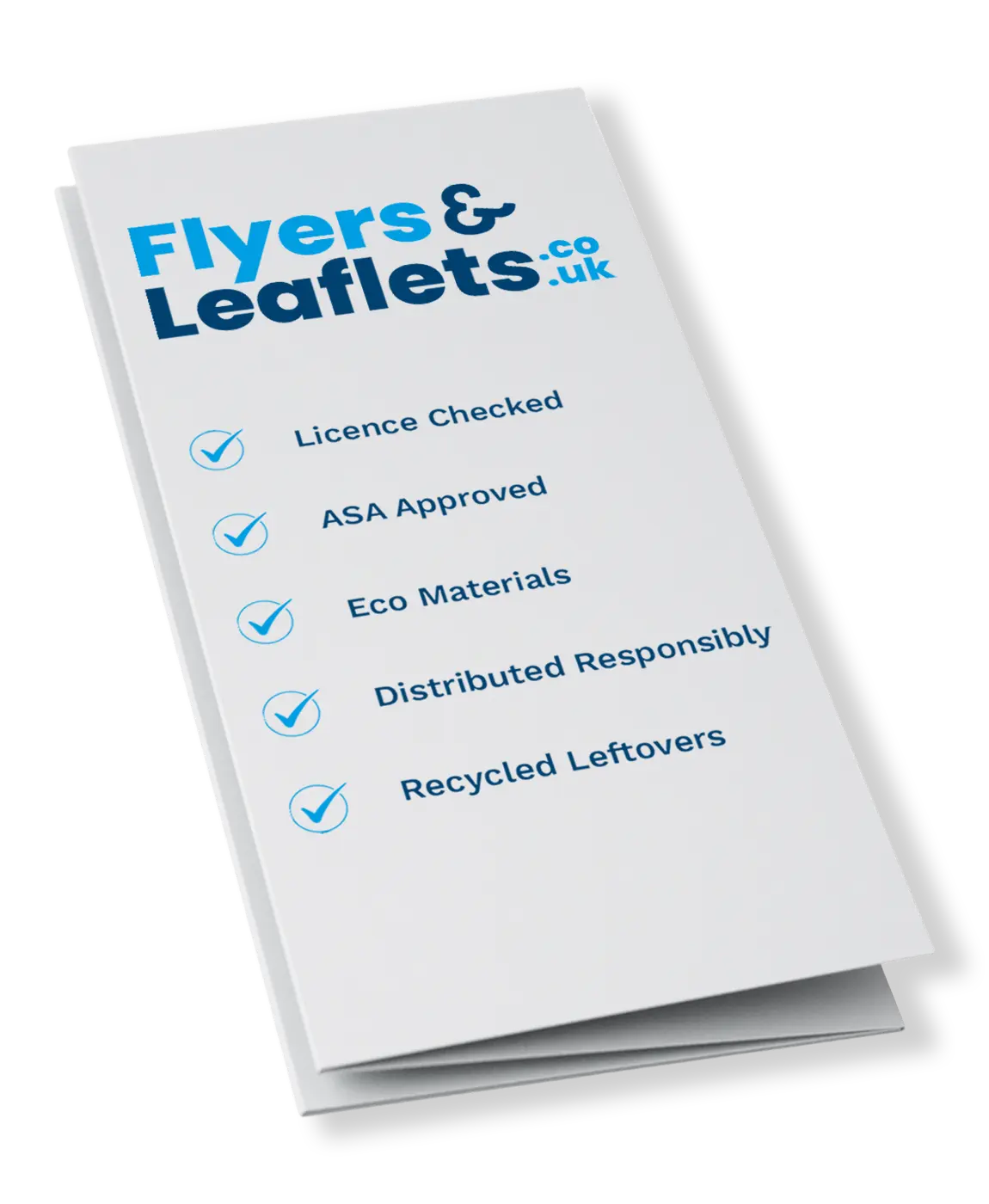
Keep your campaign compliant and effective from start to finish. Before printing, confirm whether a council licence is required, ensure your design meets ASA standards, and use a printer with sustainable materials. During distribution, avoid littering or leaving flyers on private property without permission, and make sure your team follows local rules. After the campaign, measure your results, recycle any leftovers, and record your compliance steps.
Quick Checklist:
- Licence secured
- Advertising claims verified
- Eco-friendly materials used
- Responsible distribution
- Recycling and reporting completed
You can also choose from a wide range of formats, such as A4 leaflets or DL leaflets, to suit your campaign’s reach and budget.
Why Ethical Printing Makes Business Sense
Ethical and compliant flyer printing benefits more than just the environment — it supports long-term brand growth.
By adopting sustainable and responsible practices, UK businesses can:
- Enhance brand trust among eco-conscious consumers.
- Reduce waste and costs through efficient print runs.
- Meet corporate sustainability goals and improve public image.
- Increase campaign ROI with compliant and well-targeted materials.
With the UK print market exceeding £9 billion (IBIS World), flyers remain a key part of successful marketing strategies. When produced legally and ethically, they offer measurable returns while contributing positively to community and environmental goals.
Conclusion: Responsible Printing for a Sustainable Future
Flyer marketing continues to deliver strong results for UK businesses, but compliance and ethics are essential. Understanding distribution laws, adhering to advertising standards, and committing to sustainable materials ensures your campaigns are both effective and responsible.
Now is the time to review your flyer strategy — verify local permissions, assess your design for compliance, and choose environmentally friendly printing methods that reflect your brand’s values. For a comprehensive overview, explore The Ultimate Guide to Flyer and Leaflet Printing.
Take the next step
Work with a trusted UK printing partner who understands both legal and ethical printing standards. Create campaigns that connect with your audience while contributing to a cleaner, more sustainable future for print marketing.